
Written By:
Selma’s Comeback
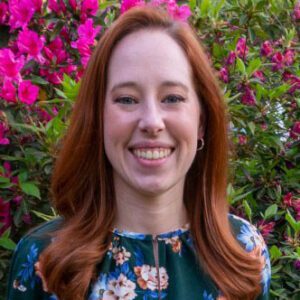
The Town of Selma has access to regional railroads and Interstate highways. However, it has not shared the same economic success as its neighbors.
A long-standing lack of funding for infrastructure, especially for maintenance and replacements, has hurt quality of life. Water, wastewater, and stormwater infrastructure gradually deteriorated.
After Hurricane Florence, the Town of Selma started rebuilding with help from WithersRavenel.
Selma by the numbers
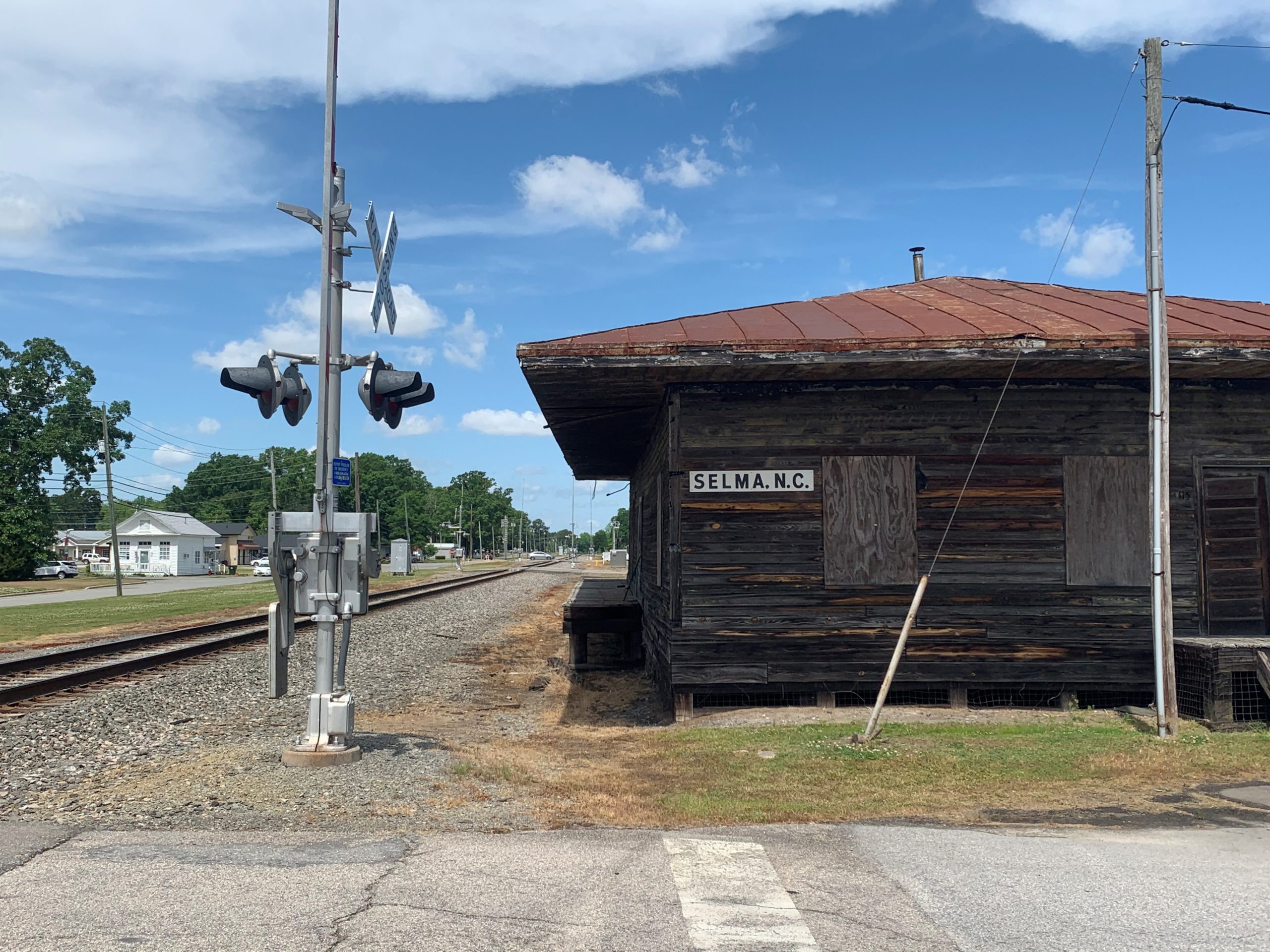
The Town of Selma is located in central Johnston County and borders the county seat of Smithfield, North Carolina. The Town provides its own utilities, including water, wastewater, stormwater, and electricity.
The Town’s population is estimated at 6,746 people as of 2019. More than 83 percent of the population is low- to moderate-income. More than 15 percent of the population is 65 years old or older.
Approximately 48 percent of the population identifies as Black or African American. 40 percent identifies as white or Caucasian, with other races and ethnicities making up the remainder.
Race-based income inequality and an aging population have affected Selma. As a result, Selma has not experienced the same growth as nearby towns and counties. Without an influx of younger workers or new businesses, the Town has struggled to generate sufficient tax revenue to fund cyclical and critical infrastructure projects.
Disaster and discovery
After Hurricane Florence struck North Carolina in September 2018, the Town noticed a spike in infiltration and inflow, or I&I, in its wastewater system. I&I occurs when structurally compromised sewer pipes allow groundwater and stormwater runoff to seep into the wastewater system. I&I increases the volume of sewage being treated, which in turn increases the total cost of wastewater treatment.
Prior to Florence, the Town’s average monthly wastewater treatment cost was $80,000. After the storm, the Town’s cost skyrocketed to $160,000 per month. Town officials understood that hurricane damage and I&I were the culprits, but they did not know where to begin to fix the problem.
The long road to funding
WithersRavenel approached the Town of Selma’s leadership about applying for an Asset Inventory & Assessment (AIA) grant. The North Carolina Department of Environmental Quality funds AIA for water and wastewater utility providers. They are meant to help utilities become stronger and more active in managing and funding their systems.
With WithersRavenel’s help, Selma applied for a water and sewer AIA grant. Unfortunately, the Town was not selected to receive funds during that award cycle. However, it was awarded a sewer AIA grant in 2021.
WithersRavenel suggested another funding source: the Golden LEAF Foundation. Golden LEAF is a non-profit organization responsible for receiving a portion of the money from the State’s 1998 Master Settlement Agreement with tobacco companies and using those funds to create economic opportunities in North Carolina’s rural and tobacco-dependent communities.
Bob Taylor, a Funding & Asset Management Consultant at WithersRavenel, was the mastermind behind pursuing Golden LEAF funding. He identified that the non-profit had received a small amount of State money for Disaster Recovery to assist communities with projects that they would not have pursued except for the hurricane. With his guidance, the Town secured $120,000 from Golden LEAF to investigate the I&I problem.
Creating an I&I model
WithersRavenel’s Utilities and GIS departments got to work compiling the Town’s wastewater data. The team performed smoke testing, had sewer flow meters installed, evaluated sewer pump station run times, and located manholes in the field. They then worked with our GIS technicians to update the Town’s GIS mapping. Using the cleaned-up data, the GIS team built an I&I model that demonstrated how Selma’s I&I had increased significantly after Hurricane Florence. In fact, our team was able to pinpoint specific pipes that had been damaged and needed to be repaired.
WithersRavenel took the model to Golden LEAF and requested an additional $850,000 to repair the damages. We emphasized how reducing I&I will lower treatment costs and allow the Town to invest their money in other projects. Golden LEAF agreed to fund the project on the strength of the model.
WithersRavenel helped the Town put together a bid package and advertise the repair project. KRG Utility, Inc. joined the team for rehabilitation of pipes using Cured in Place Pipe (CIPP), sliplining, and pipe bursting methods.
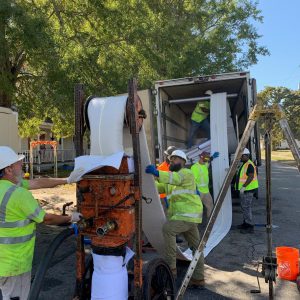
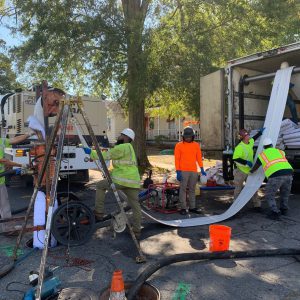
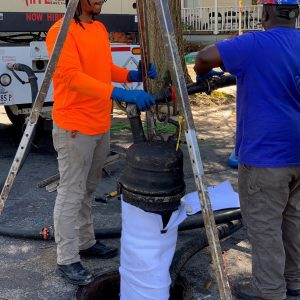
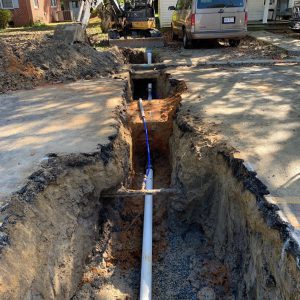
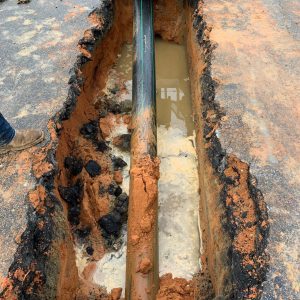
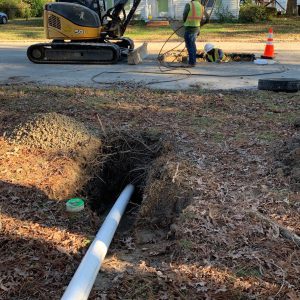
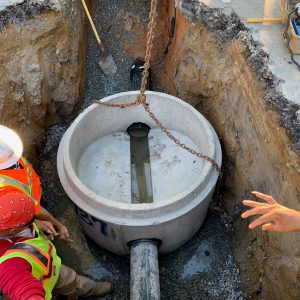
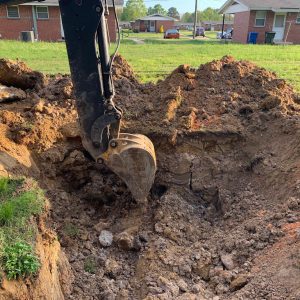
While KRG addressed some of the most critical issues in the Town’s wastewater system, Golden LEAF funding could not compensate for decades of deteriorated infrastructure. Fixing some of the worst damage would not help much with I&I costs. This is true if the rest of the system keeps getting worse and fails.
Seeking additional funding
For that reason, WithersRavenel continued to aggressively pursue other funding sources. We applied to the North Carolina State Revolving Fund’s Additional Supplemental Appropriations for Disaster Relief Act and secured $2.5 million in low-interest loans and $500,000 in loan forgiveness for the Town. We also submitted a Community Development Block grant application for another $2 million; the Town was recently informed their project ranked number 1 for CDBG-I funding.
The combined $5 million in grants will allow Selma to rehabilitate or replace nearly all of the Town’s wastewater collection system.
Opening doors and building relationships
Throughout this process, cultivating trust and open communication have been essential. Applying for funding is not simply a matter of filling out a questionnaire and dropping it in the mail. Each application has required a lengthy and intensive research phase followed by the Town Council adopting many resolutions in a short amount of time. This has required an unprecedented amount of cooperation to make tough decisions about how to fund projects.
Part of the research phase involved collecting demographic data to prove that Selma is an economically disadvantaged community. Where census data was incomplete or missing, WithersRavenel needed to conduct door-to-door surveys to determine household size and income.
Many people—not just the residents of Selma—are reluctant to disclose this information. Some fear the income data will be used to deny them social services. Others are concerned about privacy and do not wish to reveal who lives at their address.
Without this data, however, a household is presumed to be above the low to moderate income threshold for their area. In the case of Community Development Block Grant funding, at least 51 percent of the project beneficiaries must be low and moderate income; too many higher earners disqualify a community from funding. It was therefore imperative for WithersRavenel to collect the data in order to help the community get the funding they needed.
Building trust with the community
To overcome this challenge, Mayor Pro-Tem Jaqueline Lacy agreed to accompany us whenever we visited residents. “Miss Lacy,” as she is called by many, was born and raised in Selma. She has been a volunteer for several Johnston County agencies and in her church, and she is well known in the community.
Miss Lacy quite literally opened doors for the project. Her familiar face made residents far more likely to answer when we called on them, and she helped us to reassure everyone about how their data would—and would not—be used. Her support helped to foster trust and ultimately buy-in for the project.
Meanwhile, Mayor Cheryl Oliver worked tirelessly to build consensus among the Council members.
Becoming part of Selma’s staff
At the start of this project, the Town of Selma had an interim Town Manager and no Public Works Director. The Town was working diligently to fill both positions but could not postpone their projects until new staff came on board.
To help ease some of the burden, WithersRavenel Senior Technical Consultant Robbie Bald stepped into the role of Acting Public Works Director. He visits Selma several times a week to perform construction inspections and oversee the engineering process. He will continue to serve the Town until a permanent employee can take over the position.
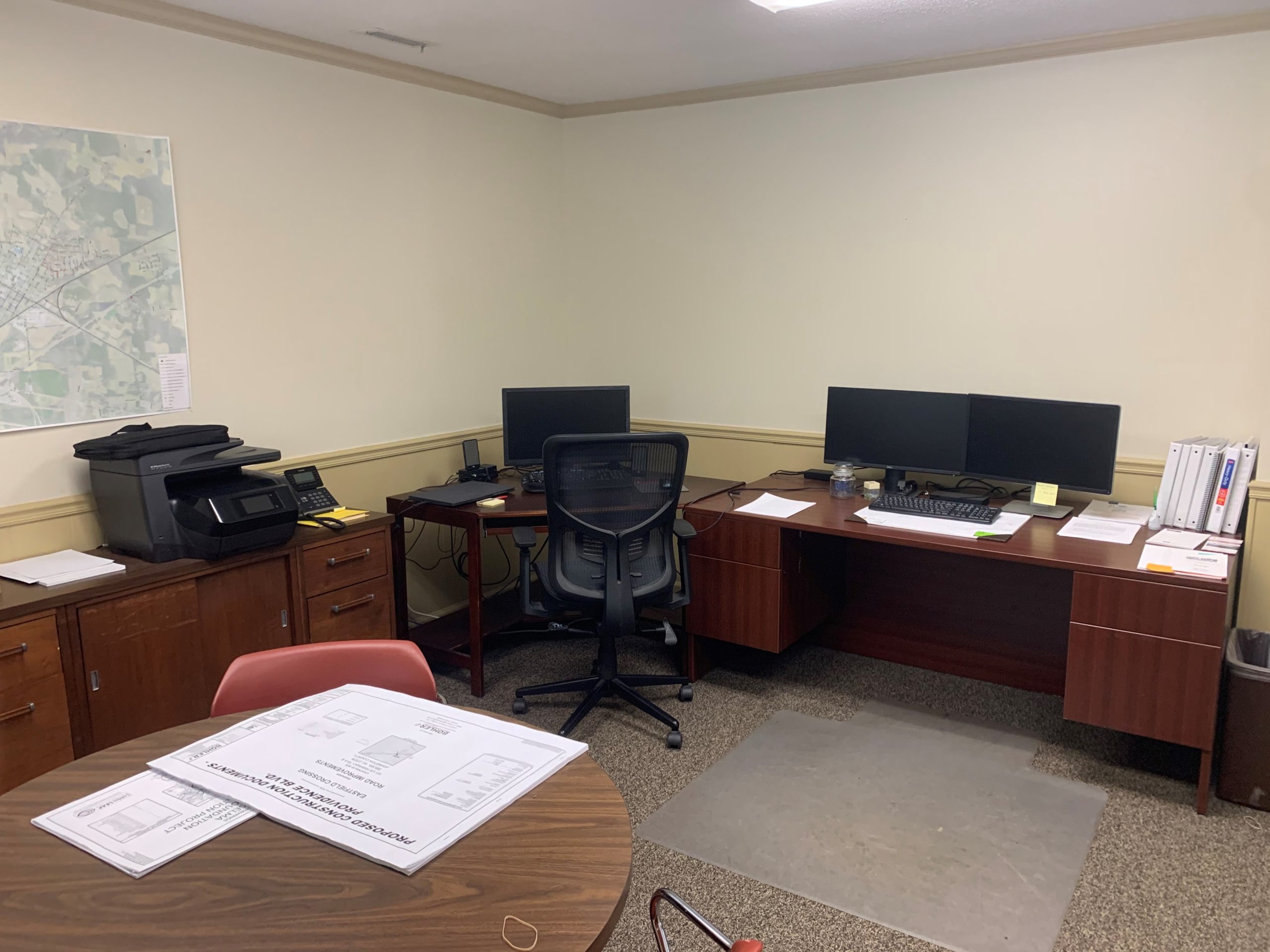
Selma recently announced they have secured a new Town Manager: Brent Taylor, the former City Administrator of Walhalla, South Carolina. Mr. Taylor shares Selma’s vision for growth and development; his past initiatives have included obtaining funding for a water treatment facility, increasing economic and cultural activities in the Walhalla Downtown District, and upgrading capital equipment. He officially started on April 1, 2021.
Weathering new challenges with renewed vitality
Life did not stop while Selma dealt with its wastewater problems. The COVID-19 pandemic in 2020 brought new challenges for the Town. But like before, WithersRavenel worked to help them find new solutions for daily struggles. These struggles were caused by stay-at-home orders and social distancing rules.
For example, Selma’s Town Hall operates out of an old bank building that was already overdue for a renovation. WithersRavenel helped the Town apply for Community Development Block Grant COVID Relief (CDBG-CV) funding to make needed upgrades. Selma is awaiting notification of award in the latest federal funding allocation.
The money will help pay for a new HVAC system with better air filtration. It will also go toward converting a broken pneumatic tube system into a functional hands-free bill payment system.
WithersRavenel is also looking for funding to replace Town Hall’s old flooring with new materials that are easier to clean and sanitize.
All of these upgrades bolster the Town’s defenses against the coronavirus in the short term and provide quality-of-life improvements over the long term.
Hammering out a brighter future
Once the COVID-19 pandemic is under control, the Town can return to addressing its infrastructure needs.
The focus up to this point has been on wastewater because it is costing the most money, but they have the same issues with water. Once the wastewater issues have been effectively managed, WithersRavenel will turn our attention to the water side of the equation.
Our asset management team will also begin preparing rate studies to figure out how the Town can build a sustainable water and wastewater utility.
WithersRavenel’s Land Development & Planning staff are working with the Town and Eastfield Development on a proposed mixed-use project. This new development would add housing, attract new businesses, and bring more tax revenue into the community. Selma is excited about the project, and WithersRavenel is helping them figure out how to get water and sewer utilities to the site. As with the Town’s other projects, we are looking to pursue funding opportunities to offset infrastructure costs.
All of these projects are designed to help Selma become a healthier, safer, and more prosperous place to live. They will provide the foundations for the Town to come into its own and participate fully in the economic and cultural landscape of Johnston County and North Carolina.
A passion for people
None of this work would have been possible without the unwavering commitment of countless people. Every department at WithersRavenel has played a role in the success of Selma. The Town’s leadership worked tirelessly to address the deteriorated infrastructure issues.
WithersRavenel has helped Selma solve a problem that has existed for decades. We have used innovative technology creatively to stretch every last dollar of existing funding resources. Through the downtown revitalization efforts, we hope to give the community a second chance at the opportunities.
For many, a working sewer plant or a new sewer line is something taken for granted and an expensive to-do on a long list of public projects. For us, they are essential ingredients for a town like Selma to flourish.
When people have the basic resources they need and more money left in their pockets, they can create richer, more meaningful lives for themselves, their families, and their neighborhoods.
We don’t just do projects—we build communities.