Written By:
When the American Society of Civil Engineers (ASCE) recently convened its Infrastructure Investment Forum in Washington, D.C., it gathered transportation experts, capital market leaders, university researchers, and engineering consultants to discuss a single, urgent question: How do we invest better in America’s aging infrastructure?
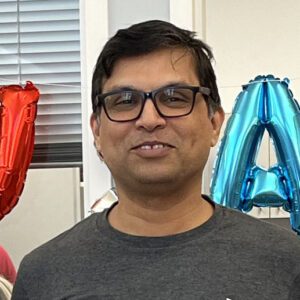
Among those helping to lead the conversation was Keith Pugh, PE, WithersRavenel’s Government Information Liaison and Past President of the American Public Works Association (APWA). Keith moderated the forum’s session on Asset Management and Lifecycle Costs, bringing his decades of municipal experience and national advocacy to the table.
At WithersRavenel, Keith helps communities with infrastructure asset management, lifecycle planning, and infrastructure strategy. He has held virtually every major leadership role within the APWA at both the state and national levels, culminating in his tenure as APWA National President — an honor that took him across the country speaking on behalf of public works professionals. His involvement with ASCE’s Report Card Committee for America’s Infrastructure underscores his grasp of issues relating to infrastructure asset management.
Recurring theme through four sessions
The ASCE forum was organized around four interconnected sessions, each tackling a distinct dimension of the infrastructure investment challenge. The first took the form of a “fireside chat” focused on bridging the funding gap, which is the difference between what the country’s infrastructure needs and what is currently being allocated.
According to Keith, ASCE’s most recent Report Card for America’s Infrastructure offered a notable, if modest, improvement in the nation’s overall grade, a reflection of recent federal and state investment levels. But he is quick to note that sustaining or improving that trajectory requires not just maintaining but increasing such an investment.

The second session, which Keith moderated, focused squarely on asset management and lifecycle costs. The third explored state and local financing tools available for infrastructure investment — an important counterweight to the assumption that federal dollars drive the bulk of maintenance and repair.
“In most locations, federal funding plays a small part in the overall maintenance, repair, and replacement of our infrastructure,” Keith said. “It’s local and state funding that drives most of it.”
The fourth and final session examined investments in energy resilience, with particular attention to the growing demands being placed on the electrical grid by artificial intelligence, electric vehicles, and electrified fleets.
The cost of doing nothing
At the heart of Keith’s moderated session was a concept that WithersRavenel has long championed: deferred maintenance is not a savings strategy but an escalating liability.
“The cost of a project does not end with a ribbon cutting,” Keith noted. “When you build a new library, a new bridge, or repave a road, the costs for that infrastructure don’t stop there. You’ve still got to plan for operations, maintenance, repair, and replacement.”
Read: Deferred Maintenance Can Be Costly to Your Assets
When maintenance programs are “chronically underfunded,” as Keith likes to say, backlogs accumulate until communities find themselves in a cycle of “worst first” spending: allocating scarce dollars to assets already in the most critical condition rather than keeping good assets in good shape. It is, as Keith puts it, the most expensive way to manage infrastructure.
Keith said the pavement analogy is instructive. A road still in good condition can be treated cost-effectively with a relatively modest intervention that can restore a pavement condition score close to perfect. Allowing that same road to deteriorate without intervention, and the options for restoration become far more expensive. Keith said the math is straightforward: Proactive maintenance is almost always cheaper than reactive repair.
What catches the eye?
Part of what makes asset management a difficult sell in many communities is political incentive, said Keith. Ribbon cuttings for new libraries, new fire stations, and new community centers draw a lot of attention because they offer visibility and put the spotlight on the community’s investment, he said. Maintenance work, however essential, generates no comparable fanfare. No one celebrates a repainted bridge or a rehabilitated sewer manhole.
“Nobody cuts a ribbon for a sewer manhole rehabilitation. But it’s exactly those maintenance activities that improve our overall infrastructure score,” he said.
“New infrastructure starts to degrade from day one,” he said. “It’s like buying a new car. It’s great, and you want it to stay new forever. But you still have to change the oil, rotate the tires, and get an alignment. If you’re not planning for that when you make the purchase, at some point you’re going to have a catastrophic failure — and it’s going to cost a lot more to fix it than it would have cost to simply maintain it.”
WithersRavenel as a fractional asset manager
The conversation connects directly to how WithersRavenel approaches its work with municipal clients. Keith said one of the primary issues that he runs into when he talks to communities across the country is that they are already stretched thin, overworked, and understaffed, and have difficulty hiring new staff. Implementing a rigorous asset management program on top of day-to-day operations can seem daunting, if not impossible.
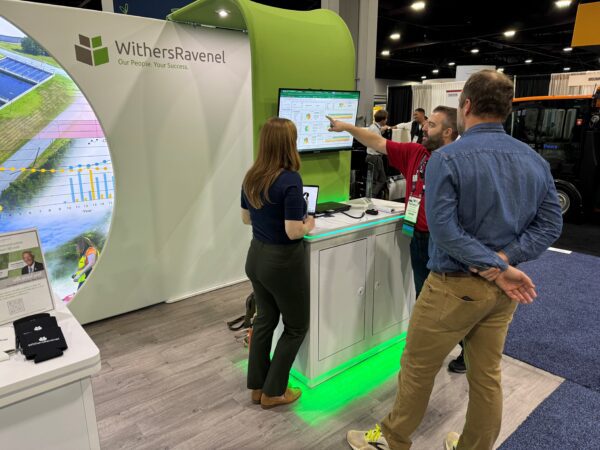
Rather than selling a software platform or requiring a community to build internal capacity from scratch, the firm serves as what Keith describes as a “fractional asset manager” — plugging into whatever data systems a client already has, whether it’s GIS, spreadsheets, or existing work-order management software. For communities that don’t yet have digital data, WithersRavenel guides them through the collection process. The result is a “managed service” that tells the story the infrastructure is trying to tell without adding new headcount or IT burden to already-strained municipal teams.
Where most planning tools look three to five years ahead, WithersRavenel’s lifecycle modeling can look out 20, 50, or even 100 years. Keith recounts a city manager in North Carolina who captured the philosophy with striking clarity: “I’m driving the bus for this community, and it’s dark, so I’ve got to have the best headlights I can have, so I can see as far down this road as possible. I don’t want to be the one who puts our bus in the ditch.”
“I love that analogy because that’s exactly what we provide you. We’re looking as far down that road as we can so that you can make small adjustments over time to account for some of those capital projects,” Keith said.
A noticeable change
Keith is cautiously optimistic about trends in local government. “I’m starting to see a shift,” he said. According to Keith, countries such as Canada and Australia have already embedded asset management frameworks into standard municipal practice, and some US communities are headed in that direction. But many others have barely started.
“The ones who haven’t started on the asset management journey are probably afraid of what the effort’s going to be for them to get into that game and then to maintain their place in that game,” he said.
But he said they should simply get started. “The journey of 1,000 miles starts with a single step, and we need people to get past that hesitancy or past that fear of change.”
Increasingly, communities are also turning attention to their public buildings, such as libraries, community centers, and fire stations, by seeking to bring the same assessments to roof replacements, HVAC lifecycles, ADA compliance, and code updates.
Spring Into Action: 6 Key Asset Management Steps for Facilities, Pavement, and Utilities
The foundational step, Keith said, “comes down to a conversation.” What level of service do residents and elected officials expect from their infrastructure?
Keith said once that question is answered, the funding conversation becomes much easier.
“Otherwise,” he said, “you’re throwing darts in the dark. Maybe you hit the target every once in a while, but what are you really aiming for?”
For Keith, asset management is ultimately an expression of values, specifically a principle instilled by his parents: Leave things better than you found them. It is a philosophy that guides his approach to asset management and is vital for sound infrastructure stewardship.
“I don’t want my children or grandchildren or future generations to bear the burden of things I should be doing right now,” he said. He believes in the concept of generational equity. “I don’t want future generations to pay the bills that I should be paying right now.”