

Written By:


At WithersRavenel, our firm tackles a lot of projects that involve federal permitting or receive some type of federal funding. For these projects, National Environmental Policy Act (NEPA) requirements and documentation come into play. These are critical to assuring compliance while also safeguarding the environment and keeping the work moving forward.
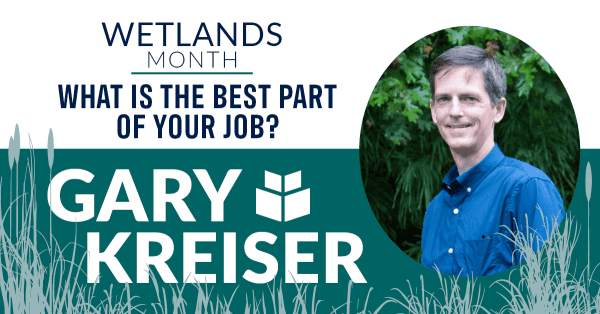
Gary Kreiser is a Senior Environmental Project Scientist at WithersRavenel and our resident NEPA expert. From his perspective, NEPA is best defined as the environmental impact a project will have on its site. Gary says there are three levels of NEPA environmental review to consider:
Categorical exclusion
This would be for your basic projects that will not cause any significant environmental impact. There are no extraordinary circumstances that would warrant a higher level of review. Some documentation is still required, but this is the simplest level of NEPA coordination, and the most common.
Environmental assessment, or EA
This level indicates that the project requires an assessment and documentation of environmental information and potential environmental impacts. If there are no significant environmental impacts, a Finding of No Significant Impact, or a FONSI, can be issued. In this case, a successful FONSI ends the NEPA review.
Environmental Impact Statement, or EIS
This level of environmental review is for projects that will have a significant level of environmental impact. Whether the project will affect wetlands, historical properties, or endangered species, the NEPA process requires documentation of the decision-making process. It also requires efforts to minimize impact. The EIS process ends with the issuance of a Record of Decision (ROD).
Gary says that working with clients on the front end of federally-funded projects is ideal. This is not only to successfully navigate the NEPA process, but also to minimize environmental impacts.
“By completing the NEPA process early, you have certainty that the project can move forward,” Gary said. “It’s a lot like the due diligence part of a project. You’re identifying places where you can’t or shouldn’t build on a site or in an area. If you know where resources are, what the potential impacts to development may be, that will make the process go a lot quicker.
“NEPA should be used as the process of how you make the decision on where to locate a project.”
Additionally, early NEPA action and consideration allow clients to identify what level of environmental review will likely be needed. This provides projects with firmer schedules during early stages, which leads to better planning, efficiency and, hopefully, certainty.
NEPA can also play a crucial role in the early stages of grant and loan funding pursuits for projects, Gary said. Sometimes, minimal environmental information may be required for funding applications, but understanding the potential environmental impacts can lead to an understanding of future NEPA needs for a particular project.
Do you want Gary and the WithersRavenel environmental team to assist you with navigation of the NEPA process? Reach out to him at 919-238-0397 or gkreiser@withersravenel.com.
Let's Connect!



About the Author
Gary Kreiser, LSS