Written By:

Atlantic hurricane season runs from June 1 through November 30, bringing renewed focus to preparedness, infrastructure resilience, emergency response, and long-term recovery planning for communities across North Carolina and the Southeast.
According to NOAA’s 2026 Atlantic hurricane season outlook, forecasters are predicting a below-normal season for the Atlantic basin, with 8–14 named storms, 3–6 hurricanes, and 1–3 major hurricanes forecast. Colorado State University’s Tropical Meteorology Project also reduced its 2026 forecast in June, citing the potential development of El Niño and increased wind shear across the tropical Atlantic.
Even with a quieter seasonal outlook, local governments know hurricane preparedness cannot be based on storm counts alone. As North Carolina Emergency Management officials emphasized, it only takes one storm to affect communities statewide.
For municipalities, counties, utilities, and public agencies, hurricane season preparation is about more than monitoring the forecast. It requires understanding infrastructure vulnerabilities, maintaining accurate records, preparing funding documentation, building response partnerships, and planning for long-term resilience before the next major storm arrives.
Preparing Communities Before the Next Storm
The best time to prepare for hurricane recovery is before a disaster occurs. Communities with current infrastructure data, clear response procedures, reliable documentation, and established partnerships are better positioned to respond quickly and recover efficiently.
Before peak hurricane season, local governments should consider:
- Reviewing emergency response plans, internal roles, and decision-making procedures
- Confirming contracts, procurement pathways, and consultant support
- Backing up asset inventories, as-builts, financial records, insurance documents, and work orders
- Identifying vulnerable stormwater, water, wastewater, transportation, and public facility assets
- Capturing baseline imagery, survey data, and GIS information for critical infrastructure
- Reviewing FEMA Public Assistance, hazard mitigation, grant, and reimbursement documentation needs
- Planning for staff capacity, public communication, and long-term recovery coordination
WithersRavenel supports local governments through an array of services, including planning, engineering, surveying, stormwater, utilities, environmental, GIS, drone services, funding, and infrastructure asset management expertise before, during, and after hurricane season.
Hurricane Season Support for Local Governments
Preparedness and Resilience Planning
Preparation helps communities reduce uncertainty before severe weather arrives. WithersRavenel can help local governments evaluate vulnerable infrastructure, review capital needs, prepare documentation, assess service risks, and identify opportunities to improve resilience across public assets.
Stormwater and Wet Weather Planning
Hurricanes and tropical systems often create challenges beyond wind damage. Heavy rainfall, flooding, inflow and infiltration, sanitary sewer overflows, drainage limitations, and undersized infrastructure can all affect community operations. Stormwater planning, wet weather modeling, and capital improvement planning help communities understand where risks exist and how to prioritize future investments.
Damage Assessment, Surveying, GIS, and Drone Services
After a storm, local governments need timely, accurate information. Surveying, GIS mapping, drone imagery, and remote sensing can support damage assessment, infrastructure documentation, debris tracking, repair planning, FEMA reimbursement, and safer evaluation of hard-to-access sites.
Funding, FEMA Recovery, and Compliance
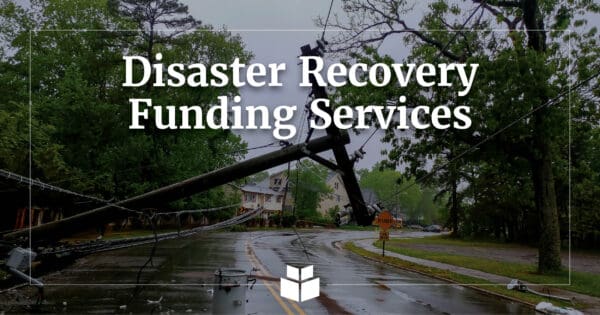
Disaster recovery funding is often complex and documentation-heavy. WithersRavenel’s Funding & Finance team helps communities navigate FEMA Public Assistance, hazard mitigation opportunities, grant and loan programs, reimbursement documentation, environmental review, and long-term recovery strategy.
Long-Term Recovery and Infrastructure Resilience
Recovery is not only about restoring what was damaged. It is also an opportunity to evaluate how infrastructure can be rebuilt stronger, smarter, and more resilient. WithersRavenel helps communities connect recovery needs with capital planning, asset management, utility improvements, stormwater upgrades, environmental permitting, and future funding strategies.
Featured Hurricane Season Resources
The following WithersRavenel resources provide additional insight for local governments preparing for hurricane season and planning for long-term recovery.