
Written By:

When hurricane season begins, local governments often focus on emergency communications, debris management, public safety, and road access. Hurricane Helene offered a stark reminder that water and wastewater infrastructure must be part of that same preparedness conversation.
In Western North Carolina, Helene caused widespread damage to communities that had never expected hurricane-related flooding at such a catastrophic scale. In Spruce Pine and Burnsville, damaged wastewater treatment plants, compromised sewer collection systems, failed electrical equipment, destroyed utility records, and limited road access created urgent public health and environmental challenges.
For local governments, the lesson is clear: hurricane preparedness is not only a coastal concern. Communities across North Carolina and the Southeast need resilient utility systems, reliable infrastructure records, emergency response partners, and flexible recovery plans before the next major storm arrives.
Hurricane Helene’s Impact on Wastewater Infrastructure
After Hurricane Helene, WithersRavenel team members deployed to Spruce Pine and Burnsville to help assess damaged water and wastewater infrastructure and identify immediate solutions.
In Spruce Pine, the wastewater treatment plant was nonoperational after significant flooding. Key plant components were inundated with mud and debris, electrical systems were compromised, and treatment infrastructure required emergency repairs before the plant could return to service. In Burnsville, damaged sewer collection infrastructure and electrical failures created similar challenges for restoring treatment operations.
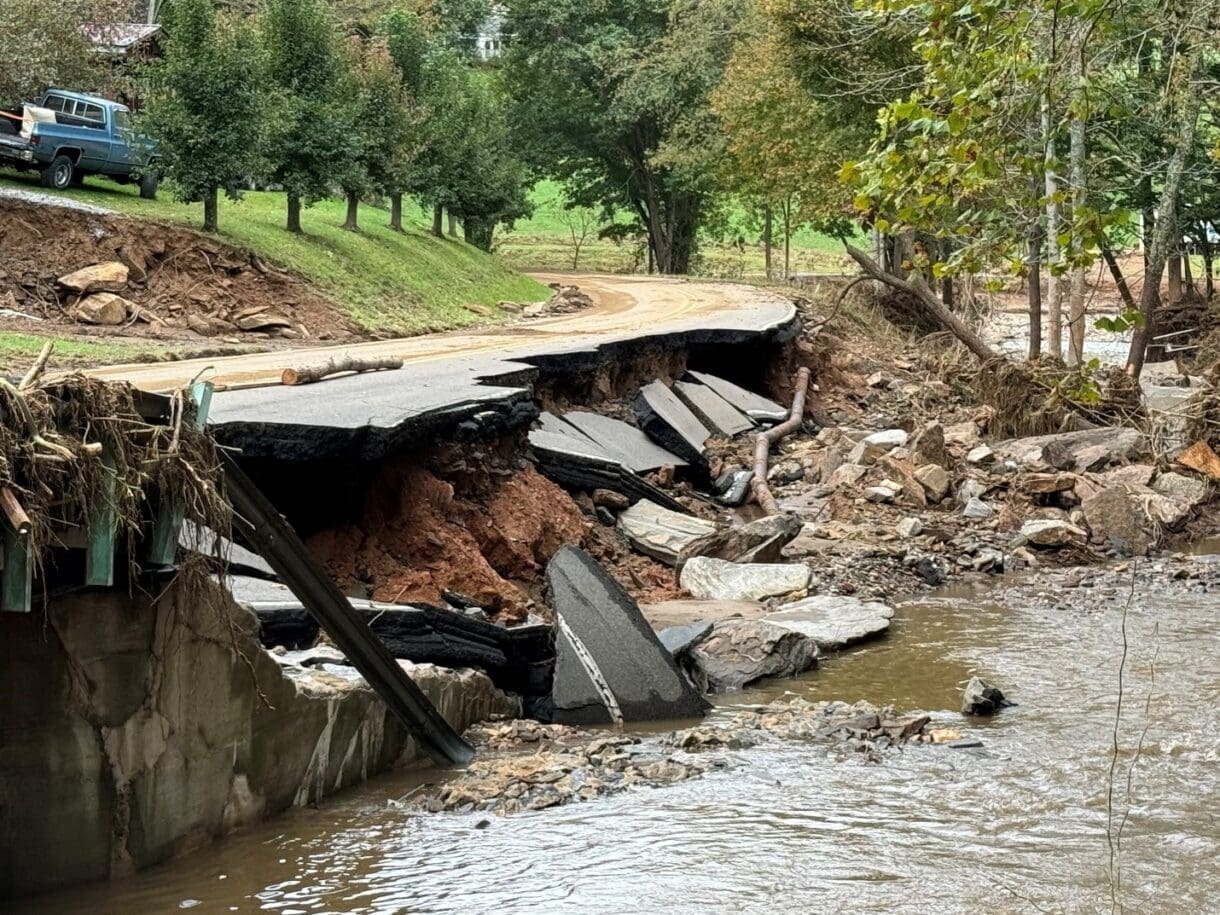
These were not routine repair projects. Roads were damaged or impassable, communications were limited, power was unreliable, and many decisions had to be made quickly with incomplete information. Public works staff, plant operators, engineers, contractors, and regulatory partners had to work together in real time to restore essential services.
Why Temporary Wastewater Treatment Matters After a Disaster
One of the most important steps in Spruce Pine was sourcing temporary wastewater treatment. WithersRavenel helped the Town procure two mobile membrane bioreactor units, commonly known as mobile MBRs, to provide temporary treatment at strategic locations.
These temporary systems helped capture and treat wastewater from areas affected by nonfunctioning pump stations. That allowed critical community facilities, including schools and a state prison, to reopen while longer-term repairs continued.
Temporary treatment can be a critical bridge after a hurricane, flood, or other natural disaster. It helps reduce environmental impacts, supports public health, and gives local governments time to develop permanent repair strategies without leaving communities without essential utility service.

Lessons Learned for Local Governments
1. Back up infrastructure records before disaster strikes
One of the most important lessons from Helene was the need for digital, off-site infrastructure records. In some communities, hard-copy plans and historical utility records were damaged or lost in flooding.
Local governments should maintain digital backups of utility maps, treatment plant plans, sewer collection system records, pump station details, permits, and emergency contacts. These records should be accessible even if municipal buildings, treatment facilities, or local servers are damaged.
2. Build a response structure before hurricane season
WithersRavenel’s response relied on a dual-team approach. Field staff assessed damage, coordinated with local officials, and problem-solved on site. Office staff supported the response by sourcing equipment, reviewing records, coordinating with vendors, and developing temporary repair concepts.
Local governments can apply a similar model by identifying who will lead field assessments, who will manage documentation, who will contact vendors, and who will coordinate with funding and regulatory agencies.
3. Know your emergency vendors and equipment options
After a major storm, equipment availability becomes a regional challenge. Pumps, generators, electrical components, temporary treatment units, fuel, pipe, and specialty contractors may all be in high demand.
Before hurricane season, communities should identify vendors, contractors, mutual aid networks, and emergency procurement pathways. Having these relationships in place can save valuable time when infrastructure is damaged and services need to be restored quickly.
4. Plan for communications outages
In Western North Carolina, road closures and failed cell towers made communication difficult. Field teams sometimes had to travel outside impacted areas to relay information.
Local governments should plan for redundant communication methods, including satellite communication, radio systems, emergency contact trees, and clear reporting protocols between field crews, town leadership, consultants, contractors, and emergency management partners.
5. Design recovery around resilience, not just replacement
Emergency repairs restore service. Long-term recovery should reduce future risk.
For wastewater treatment plants, pump stations, sewer collection systems, and water intakes, permanent repairs should consider flood elevations, erosion, access, electrical protection, backup power, site drainage, equipment location, and operational redundancy. The goal is not only to rebuild what was there, but to strengthen the system against future storms.
Preparing Water and Wastewater Systems for Hurricane Season

For local governments, hurricane preparedness should include a focused review of utility infrastructure. Before the next storm, communities should ask:
- Are water and wastewater system records backed up and accessible offsite?
- Do we know which pump stations, treatment facilities, water intakes, and sewer lines are most vulnerable to flooding?
- Do we have emergency contacts for vendors, contractors, engineers, regulators, and mutual aid partners?
- Are backup power systems tested and ready?
- Do we have a plan for temporary wastewater treatment if a plant or pump station goes offline?
- Are emergency procurement and funding documentation processes understood before a disaster?
- Do we have a plan for documenting damage for FEMA or other funding sources?
These questions can help local governments move from reactive recovery to proactive resilience planning.
Supporting Resilient Communities Before and After the Storm
Hurricane Helene showed how quickly infrastructure damage can affect public health, environmental protection, community operations, and long-term recovery. It also showed the value of preparation, local knowledge, creative problem-solving, and strong partnerships.
For local governments, hurricane season is an opportunity to evaluate infrastructure vulnerabilities, strengthen emergency response plans, and prepare water and wastewater systems for extreme weather.
WithersRavenel supports communities with water and wastewater engineering, utility assessments, asset management, funding support, disaster recovery, stormwater, environmental permitting, and resilient infrastructure design. From emergency response to long-term recovery, our team helps local governments prepare for the next storm and build stronger systems for the future.
Let’s Prepare Before the Next Storm
Hurricane preparedness starts before a storm is in the forecast. Connect with WithersRavenel to evaluate your community’s water and wastewater infrastructure, identify vulnerabilities, and plan for a more resilient hurricane season.


About the Author
Carolyn Hawkins, PE, PMP
Director of Water/Wastewater Treatment
Carolyn is an experienced project engineer and manager who brings robust knowledge of chemical and environmental engineering to the design of water and wastewater treatment processes. Additionally, her expertise in plant performance evaluation along with her background designing and optimizing pre-treatment, primary treatment, secondary/biological treatment, and tertiary treatment processes enables her to provide tailored solutions to a community’s unique treatment challenges.