Written By:

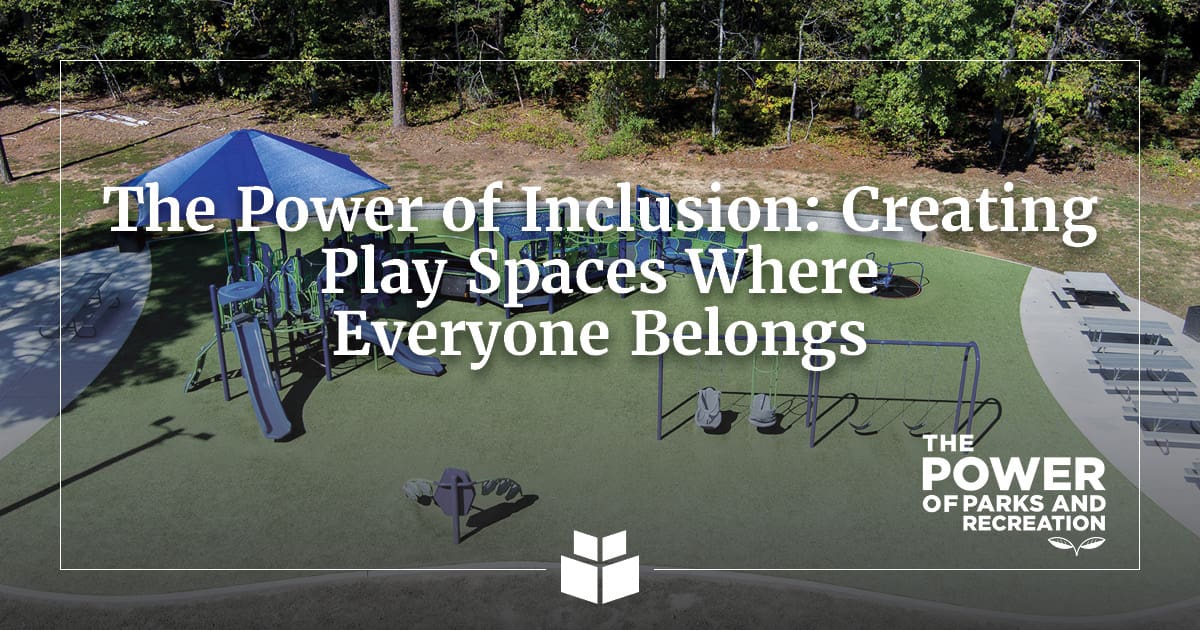
Parks have the power to bring people together. They give children room to explore, families places to connect, and communities opportunities to be active. That power is strongest when people of different ages and abilities can participate in the same experiences.
During Parks and Recreation Month, we are celebrating “The Power of” parks and how they strengthen communities. The power of inclusion begins with designing public spaces that welcome more people to play, move, gather, and connect.
Inclusive design is not limited to adding one accessible feature or meeting a minimum requirement. It starts with understanding who a park serves, how visitors move through the site, and what may prevent someone from fully participating.
Inclusion Is a Foundation
Accessibility and inclusion are closely connected, but they are not always the same. An accessible park may allow a visitor to reach the playground. An inclusive park considers what happens after that visitor arrives.
Can children with different abilities use the equipment together? Are there activities that support physical, sensory, social, creative, and imaginative play? Can caregivers comfortably reach and supervise the play area? Are children of different ages offered meaningful choices?
“Inclusive design should not be treated as an additional feature at the end of a park project,” said John Courtney, Director of Parks and Recreation at WithersRavenel. “It is a foundational part of creating public spaces where children and families can participate, connect, and feel that the park belongs to them.”
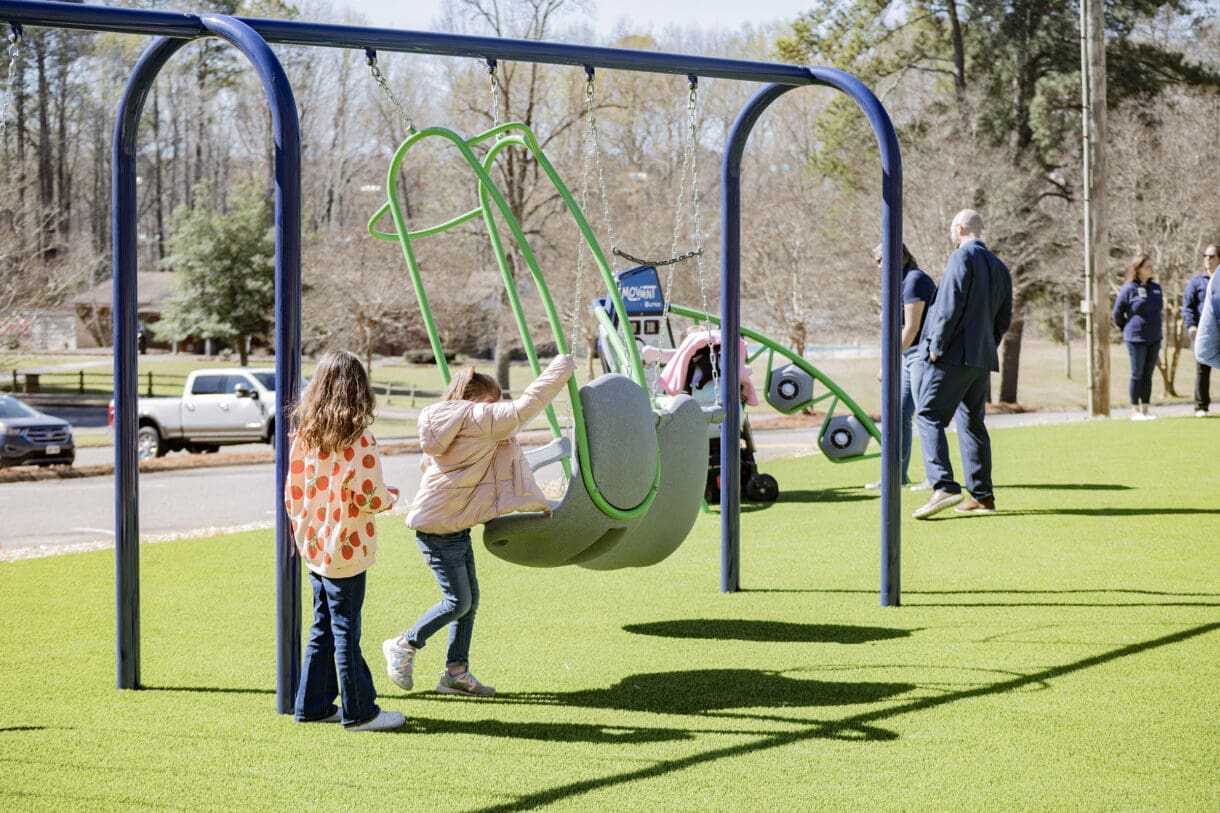
When inclusion is established as a priority early, it can influence parking, walkways, surfacing, equipment, shade, seating, restrooms, and connections between amenities.
“The real value of inclusive play is that it gives children more opportunities to experience the park together,” Courtney added. “When kids of different ages and abilities can share the same space, they can become instant friends, they build confidence together, share mutual experiences, and develop a much stronger sense of belonging.”
Questions Communities Should Ask
There is no single playground layout or equipment package that meets every community’s needs. Before moving into design, local leaders can ask:
- Who uses the park today, and who may face barriers?
- Are there continuous, accessible connections between parking, sidewalks, restrooms, gathering spaces, and play areas?
- Can children with and without disabilities participate in the same spaces?
- Does the playground offer multiple types and levels of play?
- Can caregivers with disabilities comfortably navigate and supervise the space?
- What do families, recreation staff, educators, and disability advocates say they need?
- Can improvements be phased if the full vision cannot be funded at once?
- Can we incorporate local history, nature, public art, and community input to help create memorable destinations that inspire exploration and community ownership?
These questions help communities define the experiences they want the park to provide.
Turning Community Needs into a Park Plan
WithersRavenel’s Parks and Recreation team helps communities translate those goals into practical plans. The process begins with listening to staff, residents, caregivers, and user groups. Their input can reveal barriers that may not be obvious during a site visit.
The team then evaluates slopes, parking, sidewalks, drainage, utilities, shade, visibility, and connections to other amenities. Accessibility cannot be considered only within the playground boundary. A well-designed play area can still be difficult to use if the route leading to it is disconnected, steep, narrow, or made from an unsuitable material.
Next, the team develops a recreation program that defines what the park should allow people to do. That may include climbing, swinging, balancing, sensory exploration, imaginative play, social interaction, or quiet retreat. The program also considers age ranges, caregiver needs, maintenance, and how the playground relates to the rest of the park.
Design concepts then organize circulation, play areas, gathering spaces, and supporting amenities. The team tests whether routes are continuous, the layout encourages shared play, multiple levels of challenge are available, and caregivers can see and reach different areas.
Finally, the team helps communities consider implementation, phasing, funding, and long-term maintenance. Some projects can be completed at once, while others may prioritize foundational improvements and add amenities over time.
O.T. Sloan Park in Action
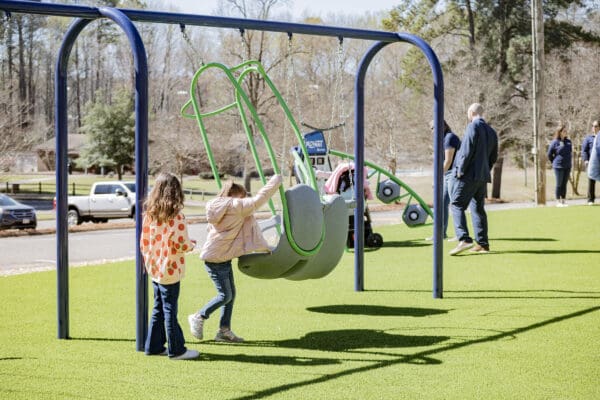
The playground improvements at O.T. Sloan Park in Sanford, North Carolina, show how these principles can work together. The project includes wheelchair-friendly ramps, sensory-friendly equipment, inclusive swings, an accessible playground pad, ADA-compliant parking and walkways, and a pedestrian plaza.
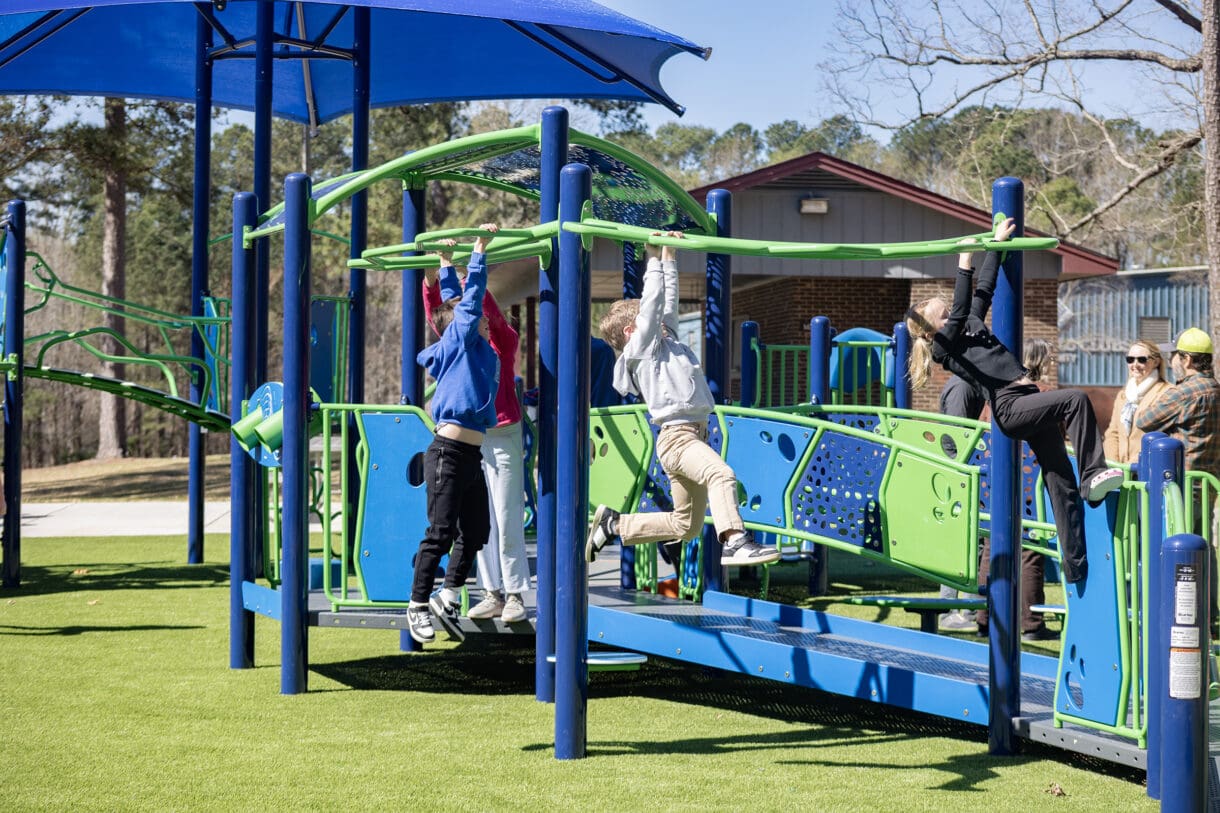
Supported by an Accessibility for Parks Grant awarded to Lee County Parks and Recreation, the project demonstrates that inclusive design depends on more than equipment alone. Parking, walkways, surfacing, gathering areas, and play features must work together to create a complete experience.
O.T. Sloan Park is one example, but the principle applies to every park project: inclusion should be part of the conversation from the beginning.
When communities ask thoughtful questions, listen to residents, and carry those priorities through planning and implementation, they can create places where more people can participate, play, connect, and belong.
That is the power of inclusion.
Create More Inclusive Places to Play
Planning a new park or looking for ways to make an existing play space more accessible? John Courtney and WithersRavenel’s Parks and Recreation team can help your community turn local needs into a practical plan for inclusive play.