

Written By:

Every year, the BIO International Convention brings together the world’s leading biotechnology, pharmaceutical, manufacturing, and life sciences organizations. This year’s conference was held June 22–25, 2026, at the San Diego Convention Center in San Diego, California—one of the world’s most established life sciences markets.
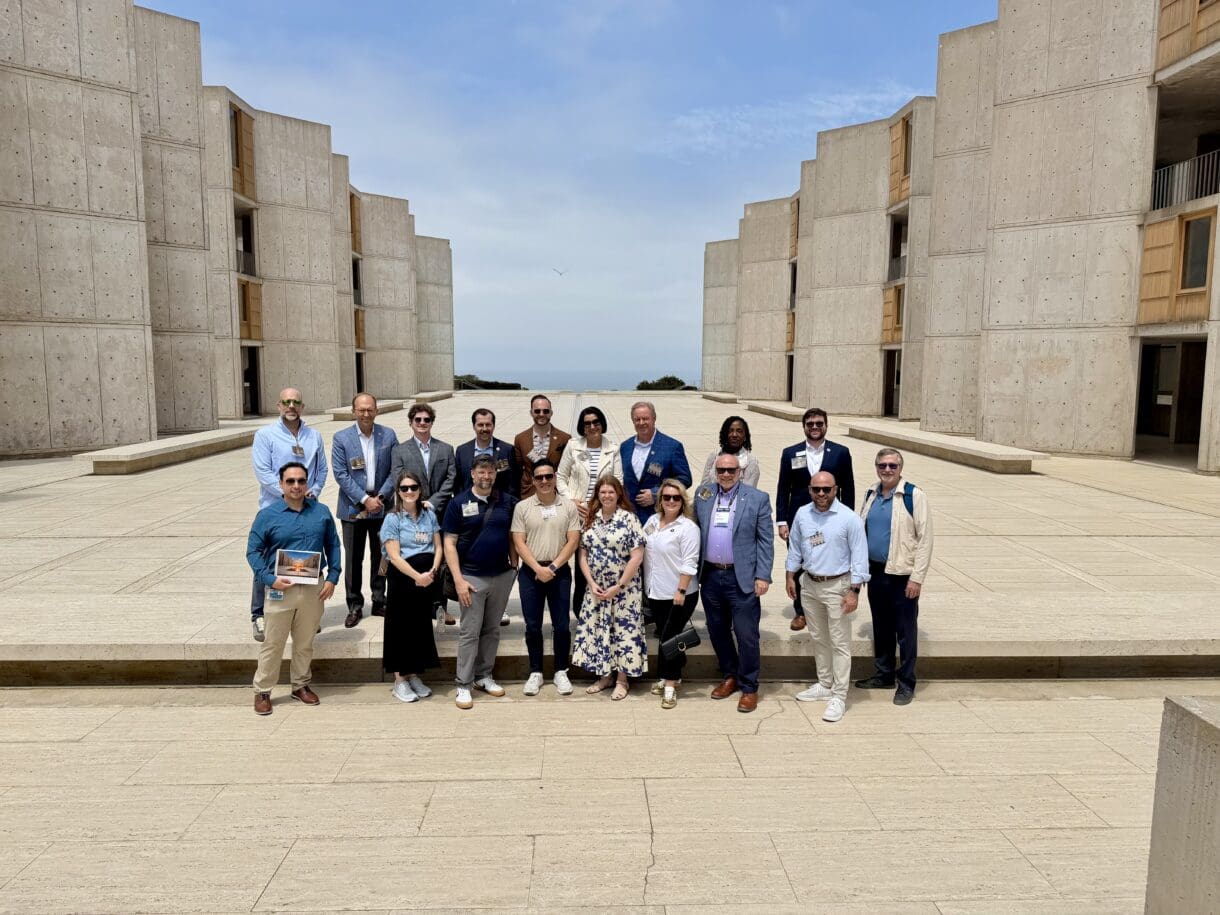
While the conference itself offered valuable insights, one of the most impactful experiences happened outside the convention center. As part of the San Diego Life Sciences Tour, sponsored by WithersRavenel and King Street Properties, economic development leaders from across North Carolina had the opportunity to see the region’s ecosystem up close, including stops connected to UC San Diego, the Torrey Pines science district, and the Salk Institute.
For me, the tour wasn’t simply about seeing impressive facilities; it was about understanding how decades of intentional planning, research investment, public-private collaboration, and land development have created one of the world’s most successful life sciences ecosystems.
Having attended BIO for nearly 15 years, I’ve watched North Carolina’s own life sciences story evolve dramatically. What once felt aspirational now feels achievable. The Triangle has established itself as a nationally recognized destination for life sciences investment, and communities across the state have an opportunity to participate in that continued growth.
Here are five lessons that stood out during this year’s visit—and why they matter for local governments, economic developers, and communities across North Carolina.
1. Great Life Sciences Markets Are Built Around Ecosystems—Not Individual Companies
One of the biggest reminders from San Diego is that successful life sciences markets don’t grow around a single employer. They grow because research institutions, universities, startups, manufacturers, suppliers, investors, and local governments all reinforce one another.
The Salk Institute and UC San Diego helped establish a culture of research and innovation that attracted companies. Those companies attracted talent. That talent attracted additional investment. Over time, an ecosystem formed that continues to strengthen itself.
The Triangle has many of those same ingredients.
With institutions like Duke University, UNC-Chapel Hill, NC State University, and organizations throughout Research Triangle Park, North Carolina already possesses the educational and research foundation needed for continued growth.
The opportunity now is to continue strengthening the connections between education, research, industry, and community development so the ecosystem continues expanding well beyond the Triangle.
2. Speed to Market Is a Competitive Advantage
Life sciences companies operate differently from many other industries.
Building a manufacturing or research facility is only one step in a much longer process. Validation, regulatory approvals, equipment commissioning, and operational readiness often take years before a facility begins producing products.
Because those timelines are already lengthy, delays during site selection, entitlement, permitting, or infrastructure improvements become even more significant.
Communities that can reduce uncertainty gain a meaningful competitive advantage.
Being “site ready” means far more than having vacant land. It means planning and zoning are aligned with intended uses. Utilities are available. Transportation access is understood. Permitting pathways have been considered. Reviews happen efficiently, and opportunities to run approvals in parallel—not sequentially—have already been identified.
For local governments, preparedness becomes part of the economic development strategy.
3. The Next Opportunity Is Strengthening the Supply Chain
One theme surfaced repeatedly throughout the conference: attracting major life sciences companies is only part of the equation.
As North Carolina continues welcoming major investments—from companies like Fujifilm Biotechnologies, Genetech, AbbVie and others—the supporting supply chain becomes increasingly important.
Every manufacturing campus depends on dozens of additional businesses providing equipment, packaging, logistics, laboratory services, specialized manufacturing, maintenance, and countless other functions.
That creates opportunities for communities well beyond the largest research hubs.
Not every community will recruit a billion-dollar pharmaceutical campus. Many, however, can attract suppliers, specialized manufacturers, or complementary businesses that support the broader ecosystem.
Economic development succeeds when communities recognize where they fit within that larger network.
4. Every Community Doesn’t Need Greenfield Sites to Compete
Greenfield development will always play an important role in attracting major employers, but it isn’t the only path forward.
One takeaway from conversations throughout the week was the importance of existing buildings and redevelopment opportunities.
Many suppliers and supporting businesses don’t necessarily require large, undeveloped campuses. Existing industrial facilities with appropriate zoning, infrastructure, and utility capacity may allow companies to become operational much more quickly.
As developable land becomes increasingly limited—and more expensive—communities that understand their existing building inventory may find themselves surprisingly competitive.
Economic development isn’t always about creating new opportunities. Sometimes it’s about recognizing the value of assets that already exist.
5. North Carolina’s Momentum Is Real—Now We Need to Stay Ready
Perhaps the biggest takeaway from this year’s BIO Conference wasn’t found inside a presentation.
It was seeing how many North Carolina communities are now part of the conversation.
Years ago, North Carolina had relatively few municipal and economic development representatives attending BIO. This year, leaders from across North Carolina—including the Triangle, Triad, and Charlotte regions—were actively engaged in learning from one of the country’s most established life sciences markets.

That reflects something much bigger than conference attendance.
It reflects North Carolina’s growing reputation as one of the nation’s premier destinations for life sciences investment.
The challenge moving forward isn’t whether the opportunities exist.
It’s whether communities are prepared to capture them.
Looking Ahead
San Diego’s success didn’t happen overnight. It resulted from decades of investment, collaboration, thoughtful planning, and a long-term commitment to innovation.
North Carolina is writing its own version of that story.
For local governments, developers, and economic development organizations, the lesson is clear: the communities that invest today in site readiness, infrastructure, permitting efficiency, and collaborative planning will be best positioned to attract tomorrow’s opportunities.
Our state has the talent. It has the research institutions. It has the momentum.
Now it’s about making sure we’re ready when the next opportunity arrives.
About the Author

Ashley Cagle
Executive Director, Economic and Land Development
Ashley is a growth-oriented life sciences market leader with more than 15 years of experience supporting owners, institutions, and public partners in delivering complex, regulated facilities that drive innovation and long-term value. She has a track record of enabling multi-billion-dollar life sciences and advanced manufacturing programs by aligning capital investment, regulatory frameworks, and workforce strategy. Ashley is known for bridging stakeholder priorities to enable predictable delivery, strengthen client relationships, and expand market presence across high-growth life sciences sectors.