
Written By:

Growth should give our people more opportunity and our clients more capability. Otherwise, what are we growing for?
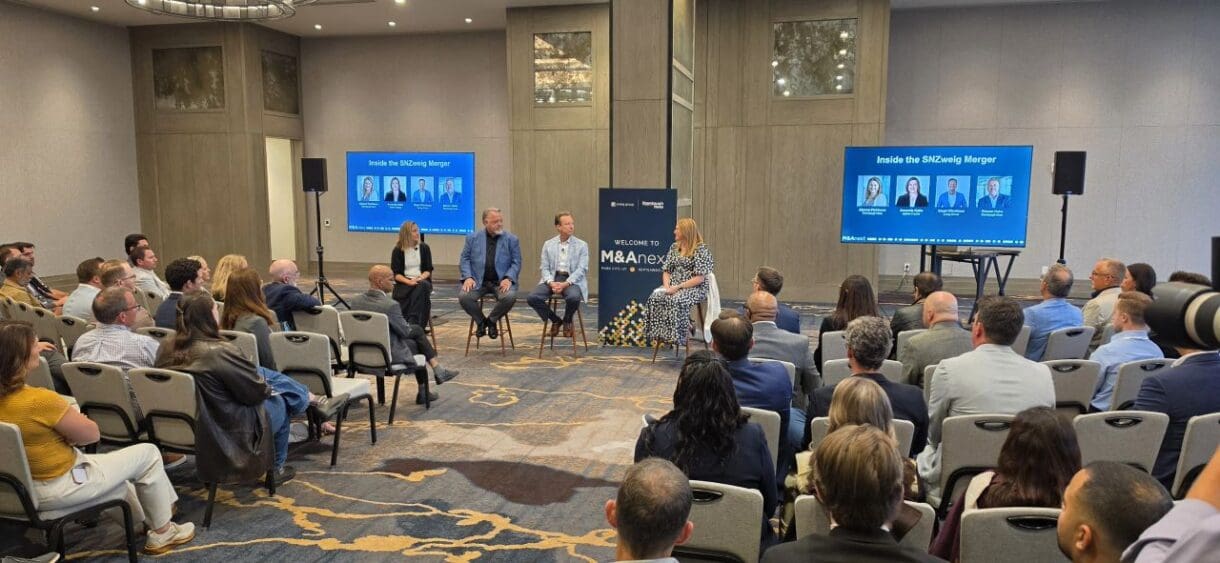
That question framed my takeaways from the M&A Next Symposium, hosted by Zweig Group and Stambaugh Ness (now SNZweig, congrats!) on September 28–29, 2026, in Park City, UT. The event brought together leaders from the architecture, engineering, and construction (AEC) industry to discuss mergers and acquisitions (M&A), ownership transitions, capital, and long-term, sustainable growth.
I wish I could have made every session, but these are the takeaways that stuck with me from the sessions and conversations with industry experts.
The opening discussion explored the thinking behind the combination of Stambaugh Ness and Zweig Group, including strategic alignment and what an investment partner can bring to a professional services business. It raised a question worth carrying into any growth conversation: Why are we doing this?
My takeaway: The environment around us is getting more dynamic, and some days, more chaotic. Client needs, talent availability, leadership demands, and technology are changing outside our control. The answer is not to chase every opportunity. It is to stop thinking traditionally about our industry and our businesses, look through the windshield, gather the cues, and navigate what is ahead responsibly and boldly.
What got us here won’t get us there!
1. Grow for Strategic Relevance, Not Size Alone
In my notes from the M&A market outlook presented by Jeff Adams and Will Swearingen, several markets continue to be strong drivers of value: power, water, wastewater, and healthcare. The discussion also noted challenges in land development and emphasized specialized expertise, durable client relationships, and transferable leadership.
The lesson is not to chase whatever market looks attractive today. It is to understand where your strengths meet a lasting client need in a sustainable market. In my opinion, you can be successful in more volatile markets, but it takes a strategic vision paired with a focused, optimized business plan and the right clients.
For firms serving North Carolina and the Southeast, I like a simple three-question test:
- Does the next hire, investment, or partnership help us address a need we understand?
- Does it add expertise that complements what we already do well?
- Can we scale it quickly and responsibly?
Be strategic. Stay focused. Build on your foundation, look through the windshield, and evolve for the road ahead. Do not be reactive and try to be everything to everyone.
“Conviction creates multiples.”
2. Culture and Trust Are Part of Any Deal
Ardurra CEO Ernesto Aguilar, who may have earned an unofficial second title as M&A Next’s chief entertainment officer, brought the conversation back to the keys for successful acquisitions: fit, trust, and shared goals. Financial viability helps too!
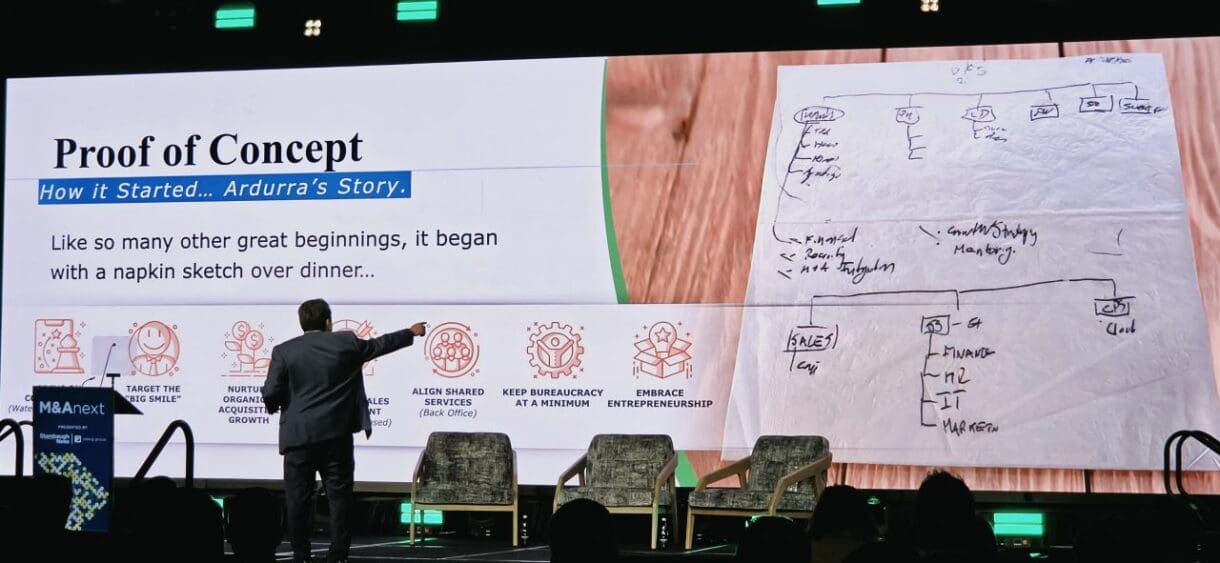
His message emphasized preserving the strengths that made an organization successful in the first place rather than treating the financial terms as the whole story. People are the heart of an organization and the value drivers. They should be treated with respect and integrity, with a spirit of community.
His relationship analogy was a good one, and an entertaining one: Do not fall in love too early. Take the time to understand and align with each other. Ask whether you are genuinely better off together.
That means looking beyond complementary services or geography. How do the organizations make decisions? How do they treat their people? What commitments have they made to clients? Are they aligned on the strategy and what growth should accomplish?
Culture is not something to sort out after closing. Explain the why. Honor commitments. Preserve what works, and be open to ideas that can make both organizations stronger.
“It is about people. These are people’s lives.”
3. Give the Vision Resources to Succeed
“Vision without resources is just a hallucination.”
That thought connected directly to my notes from Eric Von Stroh’s session on capital, succession, and growth. How can private equity (PE) or another capital partner become a trusted partner? It starts with much of what Ernesto emphasized: fit, trust, shared goals, and alignment.
A capital partner can bring strategic guidance, operating resources, and increased investment capacity for organic initiatives and acquisitions. That can help accelerate growth and, when the strategy works, increase equity value.
The important words are alignment and options. A firm may have a clear vision for developing leaders, adding specialized expertise, investing in technology, or serving new geographies. Turning that vision into action requires resources, expertise, and the ability to make thoughtful investments.
But capital is not the strategy. It should support the strategy.
Choose the right partners. Align expectations and strategy early. Establish accountability together. Be clear about what the investment should make possible for employees and clients. The opportunity is not simply to grow faster. It is to pursue the right opportunities for an aligned strategy with the resources to execute well and create value together.
4. Build Leadership, Not Just Headcount
One of the most practical takeaways was the distinction between adding people and building leadership depth. Transferable leadership is an important part of that.
A larger team does not automatically create a stronger organization. Growth requires people who can make independent decisions quickly, with clear roles, accountability, and trust. No bottlenecks. It also requires people who mentor others, manage risk while responsibly pushing boundaries, improve quality, collaborate, adapt, and carry client relationships forward.
So how are you making succession planning part of the growth and value-creation strategy? A quick test: Who is ready for more responsibility? Who can make decisions without everything routing through the same few people? Who develops others? Who is willing to embrace a new adventure? Who are the strategic and futuristic leaders who can take the business to the next level?
And one uncomfortable question: Are all of those people already in your organization? You should know what the next level looks like before you answer that.
This is also why acquisitions and organic growth should not be treated as competing ideas. A well-matched partnership can bring expertise, relationships, and leadership that help existing teams grow and scale.
For employees, the goal should be meaningful opportunities to develop and contribute. For clients, it should be deeper expertise and dependable support. Those are more useful measures of growth than headcount alone.
5. Use Technology to Create Value, Not Just Cut Costs
KP Reddy challenged the room to think differently about data and artificial intelligence (AI), and I appreciated the deeper conversation with him offline. His ideas moved beyond collecting information and structuring data toward capturing decisions, understanding workflows, and using technology to create new services and revenue opportunities. That is exactly where I think AEC firms should be looking. We need to reimagine our workflows.
That is a challenge to traditional, conservative thinking in our industry. What makes our expertise valuable today? Will it be the same in the future? Where does professional judgment change a project’s direction? What could we deliver differently if our teams thought like there was no box and had better tools and more time to apply that judgment?
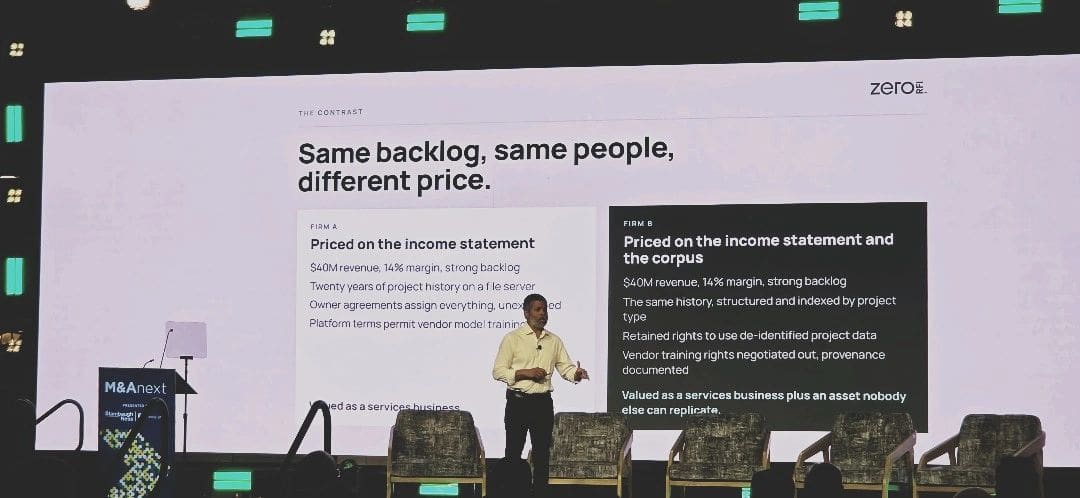
KP offered a deliberately provocative thought: best practices can promote mediocrity. That may be tough for professional engineers like me to digest, but the point landed. Standards and proven processes protect quality, but if they become the ceiling, they can also squeeze out creativity.
If we turn everyone into robots, we should probably remember that actual robots are already being built. Something to seriously digest.
The opportunity is to experiment with purpose, learn from unusual situations, and connect technology investments to problems clients actually need solved. Growth and investment should give firms the capacity to do that work, not just add more software to the same legacy processes.
Growth and Investment With a Purpose
The standard for any growth and investment decision should be straightforward: Does it strengthen our people, improve what we can do for clients, and help us serve communities more effectively?
Own our future. Stay true to who you are, but be willing to adapt strategically. Build the resources to move forward together.
For me, it comes back to a simple philosophy Eric expressed:
Happy People = Happy Clients = Happy Shareholders.
You Might Also Be Interested In...


About the Author
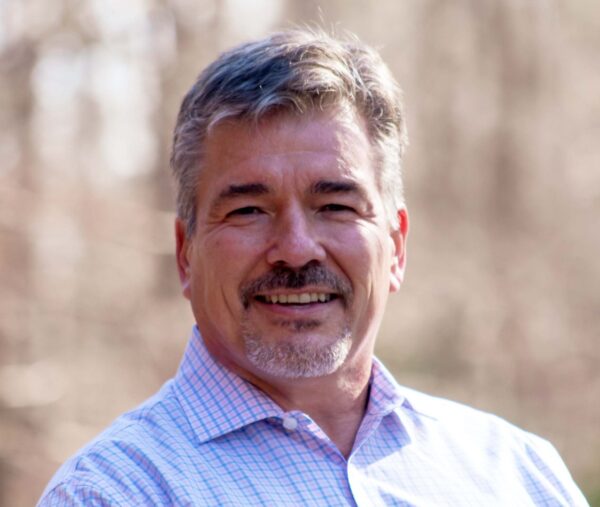
Brock Storrusten, PE
Chief Strategy Officer
Brock serves as WithersRavenel’s Chief Strategy Officer, a nearly 500-person design firm headquartered in North Carolina, where he leads enterprise strategy, long-range planning, and growth initiatives.
As Chief Strategy Officer, he is responsible for corporate visioning, strategic planning and execution, market and economic analysis, mergers and acquisitions, partnerships, and new business models. His work emphasizes aligning strategy with changing economic conditions and business environments, market volatility, talent dynamics, and evolving client needs, with a particular focus on resilience and sustainable growth. He actively leads and advises on digital transformation, AI governance, and applied AI initiatives within WithersRavenel and the Engineering industry, balancing aggressive yet responsible adoption.
He serves as Co-Chair of the Business Applications for AI Focus Group within the ACEC National Technology Committee, where he contributes thought leadership on applied AI, governance, and the future of professional services.