Written By:

Growth is changing where, when, and under what conditions water and wastewater systems are tested.
North Carolina added nearly 146,000 residents between July 2024 and July 2025, bringing the state’s population to 11.2 million. The state ranked first for domestic migration and remained the nation’s third-fastest-growing state by percentage. That growth presents opportunities for communities, but it also increases demand for the infrastructure that supports new homes, businesses, and public services.
For local governments in North Carolina and across the Southeast, the immediate capacity question is often straightforward: Can we serve our existing customers along with this proposed development?
That question matters, but it only captures one proposed project at one point in time. A more valuable long-term question is: Where will growth test our system, when could capacity become limited, and what can we do now to prepare?
Capacity Is Not a Fixed Number

Water and wastewater capacity can look different depending on when, where, and under what conditions it is measured.
A system that performs well during normal operations may behave differently during peak demand, a major rain event, a pump station outage, or continued development within one service area. Capacity can be affected by current demands, projected growth, pipe size and condition, storage, pump station performance, inflow and infiltration, downstream bottlenecks, and operational decisions.
A proposed development may have adequate infrastructure near its connection point while contributing to a limitation farther downstream. Similarly, a system may have capacity during dry weather but face substantially different conditions when rainfall or elevated groundwater increases sanitary sewer flows.
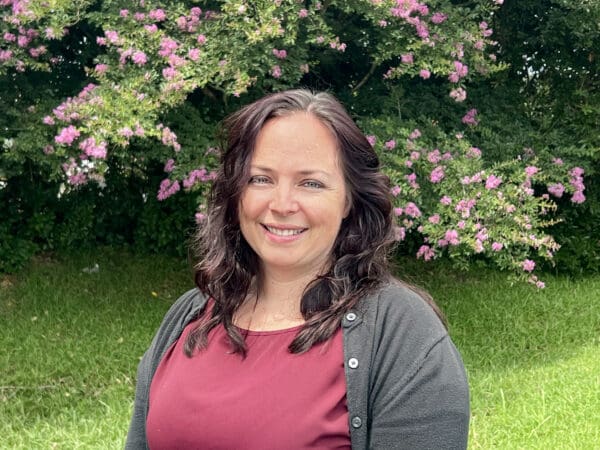
“Across North Carolina and the Southeast, communities are seeing growth place new demands on systems that may already be managing aging infrastructure, undersized facilities, wet-weather flows, or downstream limitations,” said Cathleen Saunders, PE, Director of Water/Wastewater Master Planning. “It is no longer enough to evaluate whether a single development can be served today. Community leaders need a comprehensive understanding of existing system constraints, areas targeted for growth, and the cumulative impacts of future development to proactively plan investments and maintain reliable service.”
Cathleen brings more than 20 years of experience in water supply, treatment and distribution, wastewater collection and conveyance, pipeline rehabilitation, stormwater management, and long-term infrastructure planning.
Look Beyond the Most Visible Problem
Infrastructure problems do not always begin where their symptoms appear.
During one North Carolina sewer basin evaluation, sanitary sewer overflows repeatedly occurred near shallow manholes during rain events. Although the visible overflows suggested a localized problem, GIS review, field investigations, flow monitoring, and basin-wide hydraulic modeling revealed that the primary cause originated upstream through peak demands and infiltration and inflow.
Wet-weather inflows and system constraints were combining to overwhelm downstream infrastructure in this example. Without a systemwide understanding, improvements focused only near the overflowing manholes might have reduced some symptoms without addressing the conditions causing them to reoccur.
This example highlights an important capacity-planning principle: the location where a problem becomes visible may not be the location where the most effective investment should be made.
Understand How Wet Weather Changes Capacity for Sewer System Evaluation
Rainfall and groundwater can enter sanitary sewer systems through defective/cracked pipes, offset joints, deteriorated service connections, cross-connections, and aging manholes. This inflow and infiltration can consume capacity intended for wastewater and increase the likelihood of backups or sanitary sewer overflows.
Extreme storms can magnify the problem, but communities should not focus only on major weather events. Older or vulnerable systems may experience significant increases in flow during routine rainfall. In coastal and low-lying areas, elevated groundwater can also contribute to infiltration even when it is not actively raining.
Effective wet-weather planning and mitigation begins with understanding the system’s physical assets, collecting dependable flow and rainfall data, evaluating different storm conditions, and connecting the findings to a capital improvement plan.
Test Future Conditions Before They Happen
Hydraulic modeling allows communities to evaluate how water distribution and wastewater collection systems may respond as conditions change.
Rather than relying only on a snapshot of current performance, local governments can test scenarios involving future development, land-use changes, wet weather, aging infrastructure, operational adjustments, and proposed capital projects. Models can help identify vulnerable areas, pressure problems, inflow and infiltration, and the potential effects of new demand.
An extended-period hydraulic model goes beyond a single snapshot in time by simulating how a system behaves over hours, days, or longer periods under changing operating conditions. Unlike a steady-state analysis, an EPS model can account for fluctuating customer demands, storage tank filling and draining cycles, pump station operations, pressure zone interactions, fire flow demands, and the movement of water or wastewater throughout the network. This dynamic approach provides a more realistic representation of how infrastructure performs during both typical and peak operating conditions. This can help communities explore practical questions:
- Where are current and future system constraints likely to occur?
- How will growth, development, and wet-weather conditions impact capacity and reliability?
- Which assets, service areas, or operational practices should be prioritized for improvement?
- Where are the greatest opportunities to reduce inflow and infiltration, non-revenue water, and other system losses?
- How can capital improvements be phased to support growth, maintain service levels, and optimize long-term performance?
The purpose is not to predict every future condition perfectly. It is to give decision-makers a more defensible understanding of how different scenarios may affect the system.
Turn System Information Into a Shared Plan
Capacity planning becomes more valuable when it connects departments instead of remaining a technical exercise.
Planning and economic development teams understand where growth is expected. Utility staff know how the system operates. GIS and asset information show what infrastructure exists and where data gaps remain. Finance teams understand budgets, debt capacity, rate considerations, and funding opportunities. Managers and elected officials must balance infrastructure needs with other community priorities.
When these groups work from shared information, capacity discussions can guide development review, master planning, lifecycle planning, capital improvement schedules, and funding strategies.
Clear information can also help leaders explain why an improvement is needed, what risk it addresses, and why its timing matters. That creates greater confidence for staff, elected officials, residents, and developers.
Plan Before Capacity Becomes the Constraint
Communities do not have to wait for a sanitary sewer overflow, system pressure problems, development schedule concerns, or emergency infrastructure projects to begin asking where their systems are headed.
A proactive approach considers how growth, weather, system operations, and aging assets may interact over time. It identifies likely pressure points, connects them to capital and funding decisions, and creates a plan that can be updated as conditions change.
The most important capacity question is not simply, “Can we serve this development?”
It is, “What will our system need next—and are we preparing early enough?”
Let’s Connect
Is your community evaluating growth, water or wastewater capacity, wet-weather risk, or future infrastructure investments?
Connect with Cathleen Saunders, PE, Director of Water/Wastewater Master Planning; Glynn Fleming, PE, CFM, Practice Area Lead for Utilities; and WithersRavenel’s Utilities modeling team to discuss the questions your community should be asking before capacity becomes a constraint.
Learn more about hydraulic modeling for water and wastewater systems.